Trailmeister.com - Full Article
February 20, 2017
by Robert Eversole
Keeping Paradise Possible – By Robert Eversole – North East Chapter, BCHW
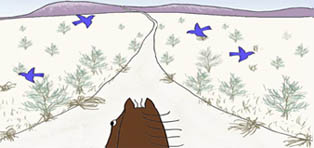
Paradise. For some that’s an image of a tropical beach, for me it’s a dirt trail that twists and meanders to a backcountry camp deep in the wilderness. It’s a quiet solitude punctuated by the peaceful clip clop of hooves and the far scream of an eagle aloft. It’s the sweet perfume of pine on a warm summer day. It’s the
companionship of a trusted horse who will faithfully take you home.
Unfortunately, in a growing number of cases paradise has padlocks.
In only a few short generations we’ve “improved” a lot of backcountry and rural areas into suburbia and shopping malls. Trail Closed signs are both dreaded and unfortunately frequently encountered. Least we lose them, we’d better take care of the equine friendly country that remains. Paradise needs protecting.
You don’t have to be a trail rider, or even have your own horse, to recognize the importance of conserving horse trails. There are many things that each of us can do to preserve equine trails. Unfortunately, often it’s sometimes hard to explain why groups like ours are important. Here are some of the reasons to join that I talk about during my expo clinics.
Horse clubs are focal points for both social events and trail stewardship efforts. For me the biggest reason to join an equestrian club is for the comradery of people who have the same interests. Being able to talk about trail conditions, feed, training, etc. is priceless.
Don’t have a local Back Country Horsemen group nearby, or don’t care for the one that is? Start a new one. These organizations are always looking for new members and new chapters. A quick google search will put you in touch with someone who can help.
Here are four reasons to join a, or start, a horse club. And quotes from those who have...
Read more here:
https://www.trailmeister.com/keeping-paradise-possible/
Monday, September 17, 2018

Friday, September 14, 2018
Monica Chapman, AERC Trails Advocate, Interviewed on Equestrian Legacy Radio
BlogTalkRadio.com - Listen
Monica Chapman, AERC Vice President and Co-Chair of Trails and Land Management Committee, interviewed on Equestrian Legacy Radio
September 4 2018
THURSDAY SEPT 4th 3 pm on Equestrian Legacy Radio's SADDLE UP AMERICA!
Jim McGarvey with Backcountry Horsemen of America and the American Endurance Ride Conference's Vice President, Monica Chapman are our special guest on this issue of SADDLE UP AMERICA!
Listen Live or to the Archived Podcast at www.equestrianlegacy.net
Monica Chapman, AERC Vice President and Co-Chair of Trails and Land Management Committee, interviewed on Equestrian Legacy Radio
September 4 2018
THURSDAY SEPT 4th 3 pm on Equestrian Legacy Radio's SADDLE UP AMERICA!
Jim McGarvey with Backcountry Horsemen of America and the American Endurance Ride Conference's Vice President, Monica Chapman are our special guest on this issue of SADDLE UP AMERICA!
Listen Live or to the Archived Podcast at www.equestrianlegacy.net
Tuesday, September 4, 2018
Conservationists say LWCF key to unlocking inaccessible public lands
PostRegister.com - Full Article
By MICHAEL WRIGHT Bozeman Daily Chronicle
Aug 28, 2018
BOZEMAN, Mont. — There are millions of acres of landlocked public land in the western U.S., and conservation advocates say a soon-to-expire conservation fund is vital to unlocking access to them.
A new report produced by the Theodore Roosevelt Conservation Partnership and onX Maps says a total of 9.52 million acres of federal public land across 13 western states are surrounded by private lands and inaccessible to the public. In Montana, an estimated 1.52 million public acres are unreachable, a total surpassed in the report only by Wyoming and Nevada.
Joel Webster, Western lands director for TRCP, said any hope of gaining public access to some of those lands relies on the Land and Water Conservation Fund, a pot of federal money set to expire on Sept. 30.
“This is the tool to address this issue,” Webster said. “If this program is not reauthorized, we’ve got a problem without a solution...”
Read more here:
https://www.postregister.com/news/local/conservationists-say-lwcf-key-to-unlocking-inaccessible-public-lands/article_b24f4251-978b-51a5-9484-34a685a8ad99.html
By MICHAEL WRIGHT Bozeman Daily Chronicle
Aug 28, 2018
BOZEMAN, Mont. — There are millions of acres of landlocked public land in the western U.S., and conservation advocates say a soon-to-expire conservation fund is vital to unlocking access to them.
A new report produced by the Theodore Roosevelt Conservation Partnership and onX Maps says a total of 9.52 million acres of federal public land across 13 western states are surrounded by private lands and inaccessible to the public. In Montana, an estimated 1.52 million public acres are unreachable, a total surpassed in the report only by Wyoming and Nevada.
Joel Webster, Western lands director for TRCP, said any hope of gaining public access to some of those lands relies on the Land and Water Conservation Fund, a pot of federal money set to expire on Sept. 30.
“This is the tool to address this issue,” Webster said. “If this program is not reauthorized, we’ve got a problem without a solution...”
Read more here:
https://www.postregister.com/news/local/conservationists-say-lwcf-key-to-unlocking-inaccessible-public-lands/article_b24f4251-978b-51a5-9484-34a685a8ad99.html
Thursday, August 30, 2018
LA Developer Loses in Equestrian Face-Off
CommercialObserver.com - Full Article
BY ALISON STATEMAN AUGUST 27, 2018 12:51 PM
It seemed at first like a painfully mismatched fight: A showdown between a local developer and the horse-loving communities of Glendale and Burbank, Calif.
The conflict in the Glendale Riverside Rancho district of Los Angeles was ignited this February when Art Simonian, the founder of Metro Investments, and Thomas Bell, the owner of Silver Spur Stables located at 1900 West Riverside Drive, filed an application with the City of Glendale to change the stables’ zoning from commercial equestrian to multifamily residential. They didn’t know what they were getting into.
Simonian and Bell were hoping to demolish the stables, currently housing 80 horses, to make way for 21 townhouses in six three-story buildings on the one-acre parcel on which the stable, built in the 1930s, sits. It would also call for the removal of a 30-feet width of Allen Avenue, an access route to the trail system and Griffith Park. The two hoped to have the project completed by August 2019. Both Simonian and Bell declined to comment on their plans.
The move became the opening volley, which would be met by stringent opposition from Glendale and Burbank residents who feared the change would threaten the area’s equine heritage and historic character, and remove valuable open space providing riders with reasonable access to Griffith Park and local bridle trails. It would also, in their opinion, put a low-density single-family zone at risk for future zone changes and decimate equestrian businesses serving horse owners and working stables...
Read more here:
https://commercialobserver.com/2018/08/la-developer-loses-in-equestrian-face-off/
BY ALISON STATEMAN AUGUST 27, 2018 12:51 PM
It seemed at first like a painfully mismatched fight: A showdown between a local developer and the horse-loving communities of Glendale and Burbank, Calif.
The conflict in the Glendale Riverside Rancho district of Los Angeles was ignited this February when Art Simonian, the founder of Metro Investments, and Thomas Bell, the owner of Silver Spur Stables located at 1900 West Riverside Drive, filed an application with the City of Glendale to change the stables’ zoning from commercial equestrian to multifamily residential. They didn’t know what they were getting into.
Simonian and Bell were hoping to demolish the stables, currently housing 80 horses, to make way for 21 townhouses in six three-story buildings on the one-acre parcel on which the stable, built in the 1930s, sits. It would also call for the removal of a 30-feet width of Allen Avenue, an access route to the trail system and Griffith Park. The two hoped to have the project completed by August 2019. Both Simonian and Bell declined to comment on their plans.
The move became the opening volley, which would be met by stringent opposition from Glendale and Burbank residents who feared the change would threaten the area’s equine heritage and historic character, and remove valuable open space providing riders with reasonable access to Griffith Park and local bridle trails. It would also, in their opinion, put a low-density single-family zone at risk for future zone changes and decimate equestrian businesses serving horse owners and working stables...
Read more here:
https://commercialobserver.com/2018/08/la-developer-loses-in-equestrian-face-off/
Sunday, August 26, 2018
New Mexico: Horse Owners Share Thoughts On Los Alamos' Bike Flow Trail
LADailyPost.com - Full Article
By KIRSTEN LASKEY
Los Alamos Daily Post
kirsten@ladailypost.com
As community input on the Los Alamos County’s bike flow trail project is collected, members of the equestrian community hope their perspectivehot on the project is considered.
A few local horseback riders recently spoke with the Los Alamos Daily Post about the bike flow trail and shared their thoughts on the primary proposed location for the trail, Bayo Canyon.
As Nancy Boudrie said, the hope is County staff will look to other locations rather than the canyon for the trail.
“We would like to see them (the County) seek an alternative to the route through Bayo Canyon,” she said.
Pajarito Mountain was the original site proposed for the flow trail, Amy Rogers said. An alternate location was sought due to the lengthy private land transfer process between the ski club and Mountain Capital Partners, LLC. Pajarito Mountain may or may not present the possibility for an alternate location due to the private ownership of the ski hill and the necessary process for using County funds to build a flow trail in this area. However, Pueblo Canyon or other existing County locations may present workable alternative sites.
One issue horse owners have with having the bike flow trail in Bayo Canyon is that it would limit horseback riders’ access to trails in the canyon, June Wall said.
“Bayo Canyon is the only access we have off the stable area … that’s a big concern,” Wall said.
In a written statement, Louis Schulte explained, “Bayo Canyon is particularly important to the horse community as it provides the only access for equestrians to all backcountry trails...
Read more here:
https://www.ladailypost.com/content/horse-owners-share-thoughts-bike-flow-trail
By KIRSTEN LASKEY
Los Alamos Daily Post
kirsten@ladailypost.com
As community input on the Los Alamos County’s bike flow trail project is collected, members of the equestrian community hope their perspectivehot on the project is considered.
A few local horseback riders recently spoke with the Los Alamos Daily Post about the bike flow trail and shared their thoughts on the primary proposed location for the trail, Bayo Canyon.
As Nancy Boudrie said, the hope is County staff will look to other locations rather than the canyon for the trail.
“We would like to see them (the County) seek an alternative to the route through Bayo Canyon,” she said.
Pajarito Mountain was the original site proposed for the flow trail, Amy Rogers said. An alternate location was sought due to the lengthy private land transfer process between the ski club and Mountain Capital Partners, LLC. Pajarito Mountain may or may not present the possibility for an alternate location due to the private ownership of the ski hill and the necessary process for using County funds to build a flow trail in this area. However, Pueblo Canyon or other existing County locations may present workable alternative sites.
One issue horse owners have with having the bike flow trail in Bayo Canyon is that it would limit horseback riders’ access to trails in the canyon, June Wall said.
“Bayo Canyon is the only access we have off the stable area … that’s a big concern,” Wall said.
In a written statement, Louis Schulte explained, “Bayo Canyon is particularly important to the horse community as it provides the only access for equestrians to all backcountry trails...
Read more here:
https://www.ladailypost.com/content/horse-owners-share-thoughts-bike-flow-trail
Friday, August 24, 2018
Land and Water Conservation Fund (LWCF) Set To Expire September 30

LWCFCoalition.com - Learn more
The amount of taxpayer money spent to provide public access to hunting and fishing grounds through the LWCF: $0
The Land and Water Conservation Fund is America's most important program to conserve irreplaceable lands and improve outdoor recreation opportunities throughout the nation.
America's most important conservation and recreation program, which has saved places in nearly every state and every county in the U.S., will expire on September 30, 2018 without action from Congress.
The Land and Water Conservation Fund is in its 52nd year of conservation and recreation success. It is because of Teddy Roosevelt's vision to start protecting our recreational opportunities, Dwight D. Eisenhower’s instinct for conservation action, John F. Kennedy's commitment to the outdoors, and Lyndon B. Johnson's creation of LWCF that we as Americans now have the most extensive network of open spaces in the world to hunt, fish, hike, swim, and play.
But that could be all over in just 52 weeks. In order to build momentum towards finding a long-term solution for authorization and funding, the LWCF Coalition is launching a year-long awareness initiative counting down to the expiration of our most important conservation and recreation program.
Each week a state or U.S. territory will be highlighted showcasing LWCF success stories from the federal, state, and local level, and opportunities that are on the horizon for LWCF to improve recreational access and conservation across America, and places that could be lost forever if Congress does not act by September 30, 2018.
#SaveLWCF before the places we love are lost forever
Learn more and take action here:
https://www.lwcfcoalition.com/
Tuesday, August 21, 2018
American Trails and Equine Land Conservation Resource to Co-Host Trails Webinar
Lexington, KY – August 20, 2018 – American Trails and Equine Land Conservation Resource (ELCR) will co-host a panel webinar on August 23, 2018 at 1:00 pm Eastern Time entitled “How They Did It: Planning and Creating Equestrian Trails Through Organization”.
Why attend this webinar? Part of American Trails’ Advancing Trails Webinar Series, this presentation focuses on the value and process of organizing throughout the equine community. Horsemen and women will see what organizations around the country are accomplishing as they protect places for equine activities of all kinds, and how collaboration is critical to getting things done. Planners will understand their role in helping achieve equestrian community needs through planning and conservation. Landscape architects will gain a better understanding of recreational equestrian trails in different regions of the country and how sustainable trail planning, design and maintenance can be done within the context of community health, wellbeing and welfare.
After an introduction by ELCR Education Director, Denise O’Meara, PLA, the following panelists will present aspects of the organization process in their communities, including sustainable trail planning, design and building.
Mary Farr works diligently to protect open land and trails in her home community of St. John’s, Florida, most recently creating trails through the community’s newly formed chapter of Back Country Horsemen, First Coast. Mary has lived in three of the fastest growing counties in the United States: Jefferson Parish (county), LA; Wake/Chatham County, NC and St Johns County, FL, and has “seen growth done poorly and done well”.
With her degree in Urban Planning and Economics and work in economic development and marketing research in the agricultural sector, Mary and husband Charles have placed a conservation easement on their 44-acre Long Leaf pine forest/horse farm, “so it will stay natural in perpetuity.” Mary will speak about the Coalitions that have formed, helping her to work through the trails and land protection scenario in her community on a variety of fronts.
Lyndall Erb is the San Mateo County, California director and president of Bay Area Barns and Trails. Lyndall will talk about BABT’s activities assisting landowners and land managers with preservation and maintenance of publicly accessible barns, stables, pastures, staging areas, horse camps, and trails throughout Alameda, Contra Costa, Marin, Napa, San Mateo, San Francisco, Santa Clara, Solano, and Sonoma Counties. BABT administers a grant program to assist local organizations with projects and activities that will help to protect equestrian activities, facilities and land.
Lyndall grew up in San Francisco and has been active in the horse community of the San Francisco Bay Area since moving back to California in 1994. She has served on the Board of several clubs and committees including Los Viajeros Riding Club; Equestrian Trail Riders Action Committee (ETRAC); and Coastside Horse Council. She served as Volunteer Coordinator for the Woodside-area Horse Owners Association (WHOA) and on the San Mateo County Confined Animal Technical Advisory Committee.
Mark Flint is a professional trail designer from Tucson Arizona, where he works as a part-time trails program coordinator for Pima County and has his own trail design business, Southwest Trail Solutions, which has designed trails in Vermont and Nevada as well as in many parts of Arizona. Mark is also a chief regional steward for the Arizona Trail Association. He will speak about the organizational process of the Association, the coalitions formed and work that has been accomplished, including specifics on trial design and maintenance in the somewhat unique conditions of the Arizona region and Arizona National Scenic Trail corridor.
Mark was heavily involved in the design and construction of the Arizona National Scenic Trail in Southern Arizona and did design and construction project management on segments in Central Arizona.
To register for the webinar, visit https://www.americantrails.org/training/how-they-did-it-advocacy-planning-and-creating-equestrian-trails-through-organization. The webinar is free, with a $15 fee for CEU credits for landscape architects and planners.
About the Equine Land Conservation Resource (ELCR): ELCR builds awareness of the loss of lands available for horse-related activities and facilitates the protection and conservation of those lands working to ensure America’s equine heritage lives on and the emotional, physical and economic benefits of the horse-human relationship remains accessible. ELCR serves as an information resource and clearinghouse on conserving horse properties, land use planning, land stewardship/best management practices, trails, liability and equine economic impact. For more information about the ELCR visit www.elcr.org or call (859) 455-8383
About American Trails: American Trails (AT) is a national, nonprofit organization working on behalf of all trail interests, including hiking, bicycling, mountain biking, horseback riding, water trails, snowshoeing, cross-country skiing, trail motorcycling, ATVs, snowmobiling and four-wheeling. AT supports local, regional, and long-distance trails and greenways, whether they be in backcountry, rural or urban areas by finding common ground and promoting cooperation among all trail interests. AT’s website, www.americantrails.org , is a comprehensive online source for planning, building, designing, funding, managing, enhancing, and supporting trails, greenways, and blueways. Contact AT at their Redding California office: (530) 605-4395.
For additional information, contact:
Denise O’Meara, Director of Education
Equine Land Conservation Resource
Phone: 859-455-8383 /Email: domeara@elcr.org
www.ELCR.org
Why attend this webinar? Part of American Trails’ Advancing Trails Webinar Series, this presentation focuses on the value and process of organizing throughout the equine community. Horsemen and women will see what organizations around the country are accomplishing as they protect places for equine activities of all kinds, and how collaboration is critical to getting things done. Planners will understand their role in helping achieve equestrian community needs through planning and conservation. Landscape architects will gain a better understanding of recreational equestrian trails in different regions of the country and how sustainable trail planning, design and maintenance can be done within the context of community health, wellbeing and welfare.
After an introduction by ELCR Education Director, Denise O’Meara, PLA, the following panelists will present aspects of the organization process in their communities, including sustainable trail planning, design and building.
Mary Farr works diligently to protect open land and trails in her home community of St. John’s, Florida, most recently creating trails through the community’s newly formed chapter of Back Country Horsemen, First Coast. Mary has lived in three of the fastest growing counties in the United States: Jefferson Parish (county), LA; Wake/Chatham County, NC and St Johns County, FL, and has “seen growth done poorly and done well”.
With her degree in Urban Planning and Economics and work in economic development and marketing research in the agricultural sector, Mary and husband Charles have placed a conservation easement on their 44-acre Long Leaf pine forest/horse farm, “so it will stay natural in perpetuity.” Mary will speak about the Coalitions that have formed, helping her to work through the trails and land protection scenario in her community on a variety of fronts.
Lyndall Erb is the San Mateo County, California director and president of Bay Area Barns and Trails. Lyndall will talk about BABT’s activities assisting landowners and land managers with preservation and maintenance of publicly accessible barns, stables, pastures, staging areas, horse camps, and trails throughout Alameda, Contra Costa, Marin, Napa, San Mateo, San Francisco, Santa Clara, Solano, and Sonoma Counties. BABT administers a grant program to assist local organizations with projects and activities that will help to protect equestrian activities, facilities and land.
Lyndall grew up in San Francisco and has been active in the horse community of the San Francisco Bay Area since moving back to California in 1994. She has served on the Board of several clubs and committees including Los Viajeros Riding Club; Equestrian Trail Riders Action Committee (ETRAC); and Coastside Horse Council. She served as Volunteer Coordinator for the Woodside-area Horse Owners Association (WHOA) and on the San Mateo County Confined Animal Technical Advisory Committee.
Mark Flint is a professional trail designer from Tucson Arizona, where he works as a part-time trails program coordinator for Pima County and has his own trail design business, Southwest Trail Solutions, which has designed trails in Vermont and Nevada as well as in many parts of Arizona. Mark is also a chief regional steward for the Arizona Trail Association. He will speak about the organizational process of the Association, the coalitions formed and work that has been accomplished, including specifics on trial design and maintenance in the somewhat unique conditions of the Arizona region and Arizona National Scenic Trail corridor.
Mark was heavily involved in the design and construction of the Arizona National Scenic Trail in Southern Arizona and did design and construction project management on segments in Central Arizona.
To register for the webinar, visit https://www.americantrails.org/training/how-they-did-it-advocacy-planning-and-creating-equestrian-trails-through-organization. The webinar is free, with a $15 fee for CEU credits for landscape architects and planners.
About the Equine Land Conservation Resource (ELCR): ELCR builds awareness of the loss of lands available for horse-related activities and facilitates the protection and conservation of those lands working to ensure America’s equine heritage lives on and the emotional, physical and economic benefits of the horse-human relationship remains accessible. ELCR serves as an information resource and clearinghouse on conserving horse properties, land use planning, land stewardship/best management practices, trails, liability and equine economic impact. For more information about the ELCR visit www.elcr.org or call (859) 455-8383
About American Trails: American Trails (AT) is a national, nonprofit organization working on behalf of all trail interests, including hiking, bicycling, mountain biking, horseback riding, water trails, snowshoeing, cross-country skiing, trail motorcycling, ATVs, snowmobiling and four-wheeling. AT supports local, regional, and long-distance trails and greenways, whether they be in backcountry, rural or urban areas by finding common ground and promoting cooperation among all trail interests. AT’s website, www.americantrails.org , is a comprehensive online source for planning, building, designing, funding, managing, enhancing, and supporting trails, greenways, and blueways. Contact AT at their Redding California office: (530) 605-4395.
For additional information, contact:
Denise O’Meara, Director of Education
Equine Land Conservation Resource
Phone: 859-455-8383 /Email: domeara@elcr.org
www.ELCR.org
Subscribe to:
Posts (Atom)